
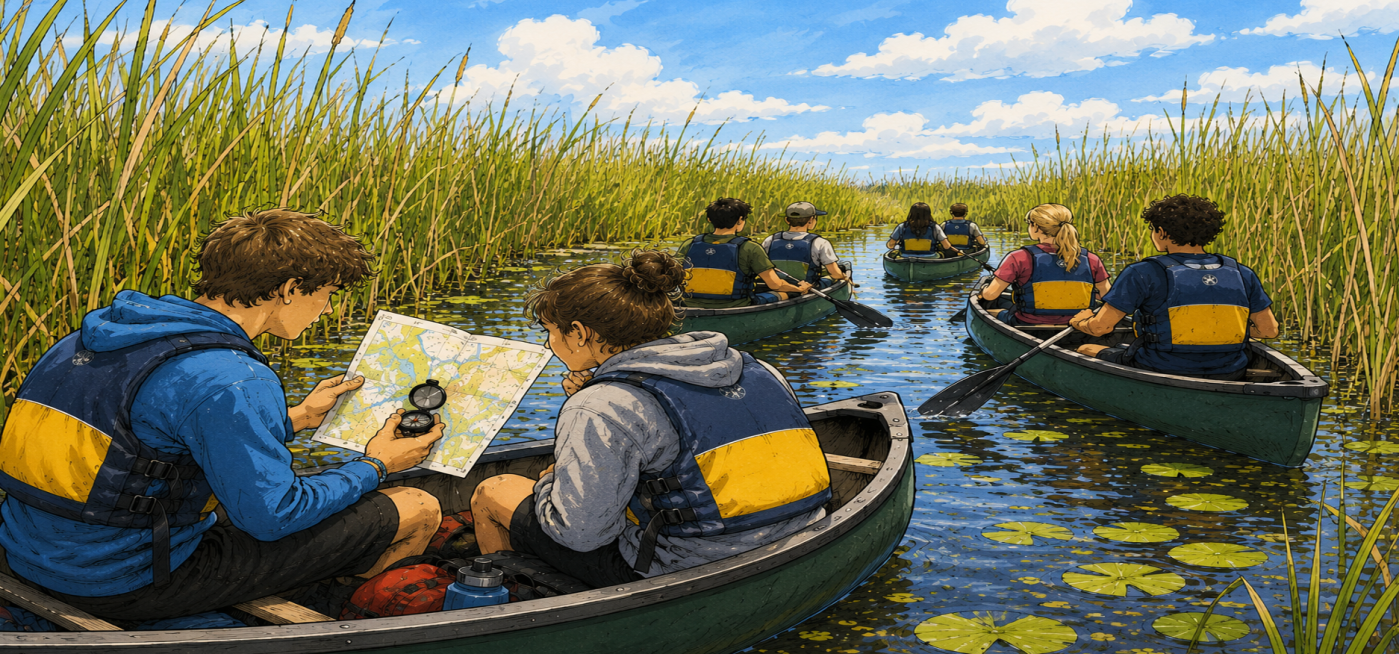
Almost thirty years ago, I found myself sitting in a canoe, completely lost in the Florida Everglades.
I had been working in education for all of three months. In fact, I wasn’t even sure education was going to be my career. I had taken a job as a substitute teacher at an independent school in South Florida while considering a future in mental health counseling. Then someone offered me the opportunity to chaperone a ninth-grade Outward Bound trip. I was told there would be five days of camping and canoeing in the Everglades, and that was pretty much all I needed to hear.
When we arrived, I was paired with eleven ninth graders and two Outward Bound instructors. On the first day, the instructors taught us everything we would need to know. We learned how to paddle, read maps, use a compass, navigate using the sun, cook and clean on the water, tie our canoes together to create a raft for sleeping, and even manage some of life’s more basic necessities while sharing that raft with thirteen other people. It was an education in self-sufficiency unlike anything I had experienced before.
On the second day, the instructors handed responsibility over to the students.
At first, everything went remarkably well. The students were energized by the responsibility and eager to demonstrate that they could manage on their own. But sometime that afternoon, we drifted off course. Not just a little off course. We were completely lost.
I can still remember the change in the group when the students realized it. The conversations became quieter. They started looking around nervously, trying to reconcile the landscape around us with the maps in front of them. Eventually, they turned to the instructors for help. Could they just tell us where we were? Could they point us in the right direction? Could they please just get us back on course?
The instructors refused.
They reminded the students that they had the tools they needed. They assured them that we were safe. But they would not solve the problem for them.
At the time, I wasn’t entirely sure how I felt about that decision. The students were frustrated. Some were anxious. A few seemed convinced we might spend the rest of our lives paddling aimlessly through sawgrass and mangroves. I may have shared some of those feelings.
But eventually, the maps came back out. The students checked the compass again. They studied landmarks more carefully, debated possibilities, tested ideas, made mistakes, corrected those mistakes, and tried again. Slowly, they figured out where we were. Then they figured out where we needed to go. Before long, we were moving in the right direction and eventually reached our destination for the day.
What I remember most clearly is what happened next. The students were proud.
Not relieved, although there was certainly some of that. They were genuinely proud of themselves because they had figured it out. The adults had not rescued them. The challenge had been real, which meant the accomplishment was real too.
Sitting in that canoe, only a few months into a career I didn’t yet know I was beginning, I learned something about education that I have spent much of the last thirty years trying to better understand. Growth does not happen when we remove every obstacle from someone’s path. Growth happens when people are appropriately challenged while knowing they are deeply supported.
Years later, I learned more about Kurt Hahn, the educator whose ideas eventually led to the creation of Outward Bound. Hahn believed deeply in the capacity of young people and in the role that challenge, responsibility, and experience play in developing that capacity. He understood that resilience isn’t something we can simply tell young people to have. It develops through opportunities to encounter difficulty, work through uncertainty, and discover that they are capable of more than they believed.
I have come to think of this as productive struggle, and the word productive is important. Challenge for the sake of challenge isn’t inherently valuable. Overwhelming students doesn’t make them resilient. Neither does creating unnecessary anxiety or placing them in situations where they have little chance of succeeding. The Outward Bound instructors did not simply abandon us in the Everglades. Before turning responsibility over to the students, they had spent an entire day teaching them the skills they would need. And even when we were lost, the instructors never left. They were there to ensure our safety and provide support. They simply refused to take away the opportunity for growth.
That distinction has become increasingly important to me because I think sometimes we create a false choice in education between rigor and wellbeing. We worry that supporting students means lowering expectations, or that challenging students requires us to be less caring. I have come to believe almost exactly the opposite.
The more deeply students feel known, the more we can ask of them.
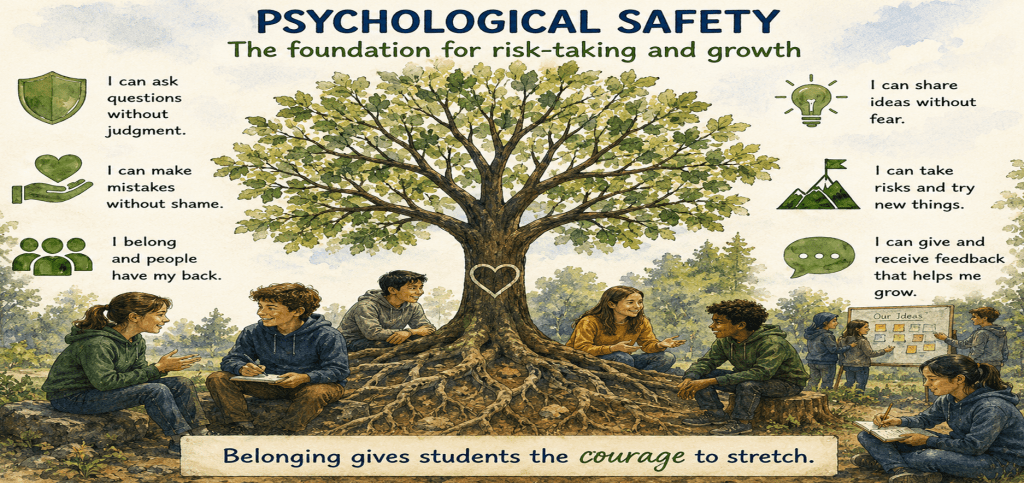
Relationships create belonging, and belonging creates the psychological safety necessary to take risks. Students who know there is an adult who sees them, believes in them, and will continue to care about them when they struggle are more willing to ask questions, attempt something difficult, make mistakes, and try again. They learn that struggle is not evidence that they don’t belong. It is simply part of learning.
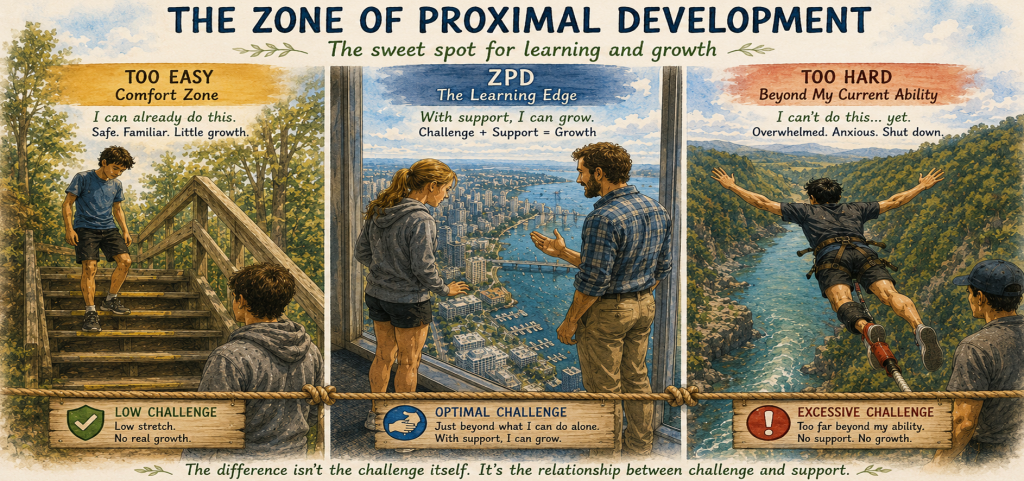
Eventually, I also discovered that Lev Vygotsky had given us language for much of what I witnessed in the Everglades through his Zone of Proximal Development. There are things students can already do independently, and there are things they cannot yet do even with help. Somewhere between those two is the learning edge, the place where students can succeed with appropriate guidance and support. That is where some of our most meaningful growth occurs.
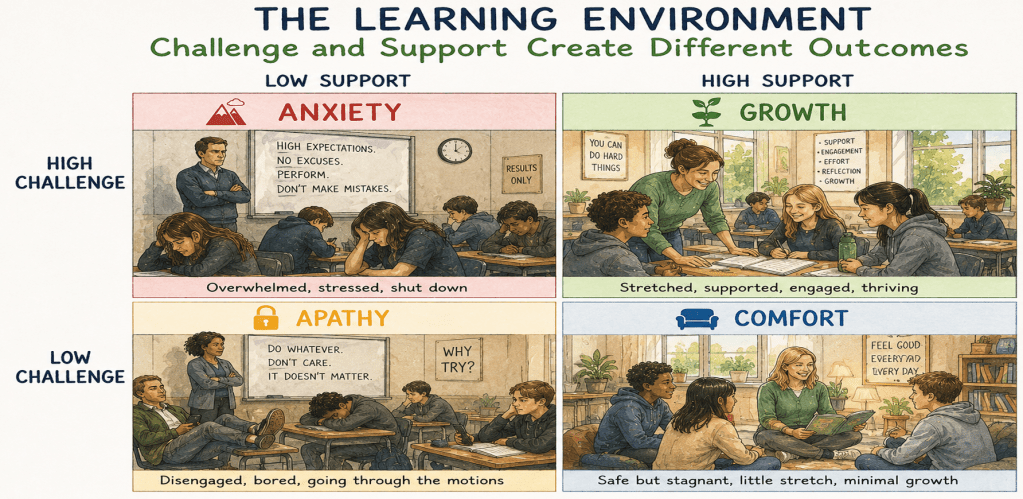
I like to think about that learning edge through two simple variables: challenge and support. When both are low, students can become apathetic. When support is high but challenge is low, students may be comfortable, but they aren’t necessarily growing. When challenge is high and support is low, anxiety can take over. But when high challenge is paired with high support, we create the conditions for growth. Students are stretched without being abandoned.
Perhaps the most important word in that last sentence is we.
Because none of this can depend upon a student being fortunate enough to encounter one extraordinary teacher. Students don’t experience school as a collection of isolated classrooms. They experience a community. They move from teacher to teacher, classroom to classroom, practice to performance, and conversation to conversation, gradually developing beliefs about themselves and about school. Do I belong here? Is it safe to ask for help? What happens when I make a mistake? Do these adults believe I am capable of something more?
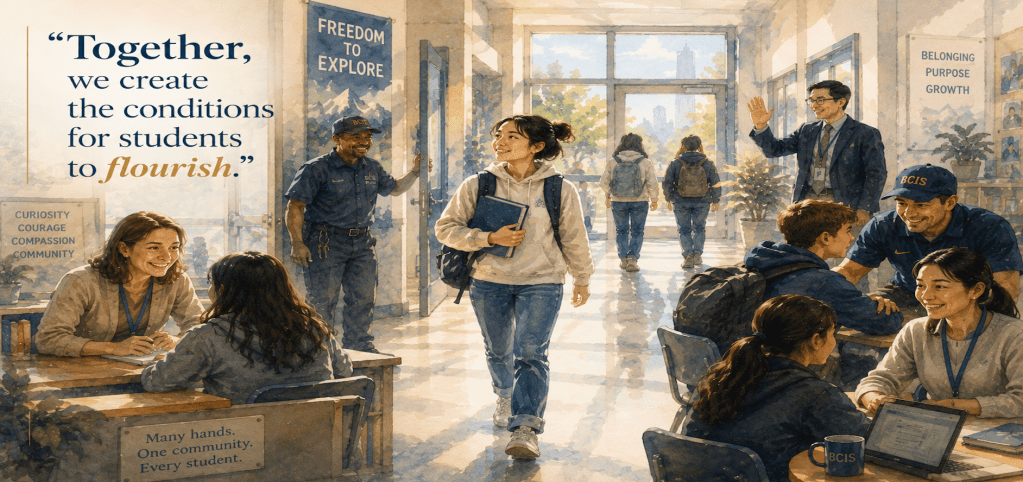
That is why collective teacher efficacy matters so much. At its heart is the shared belief among educators that, together, we can positively influence student growth. The most powerful force in a school isn’t a program, a strategic plan, or the newest initiative. It is the collective work of teachers, support staff, and school leaders creating consistent conditions in which young people are known, supported, and challenged.
We should want extraordinary outcomes for our students. We should want them to achieve at the highest levels, gain access to extraordinary opportunities, and leave our schools prepared for whatever comes next. But those outcomes are the result of the work, not the work itself.
The real work happens in the thousands of small interactions that precede them. It happens when a teacher refuses to let a student give up while also refusing to do the work for them. It happens when an advisor notices that someone who is usually outgoing has become quiet. It happens when a student makes a mistake and discovers that the adults around them still believe in them. It happens when we know when to step in, when to encourage, and sometimes when to sit quietly in the other canoe and let students find their own way.
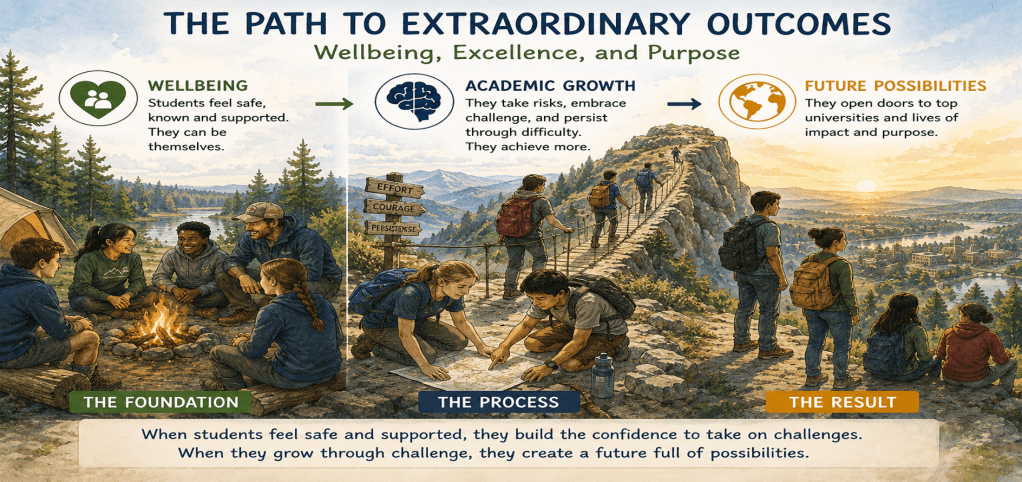
Nearly thirty years later, I still think about that afternoon in the Everglades. Those students didn’t need us to tell them where they were. They needed us to believe they could figure it out.
And then they needed the courage to do it.

